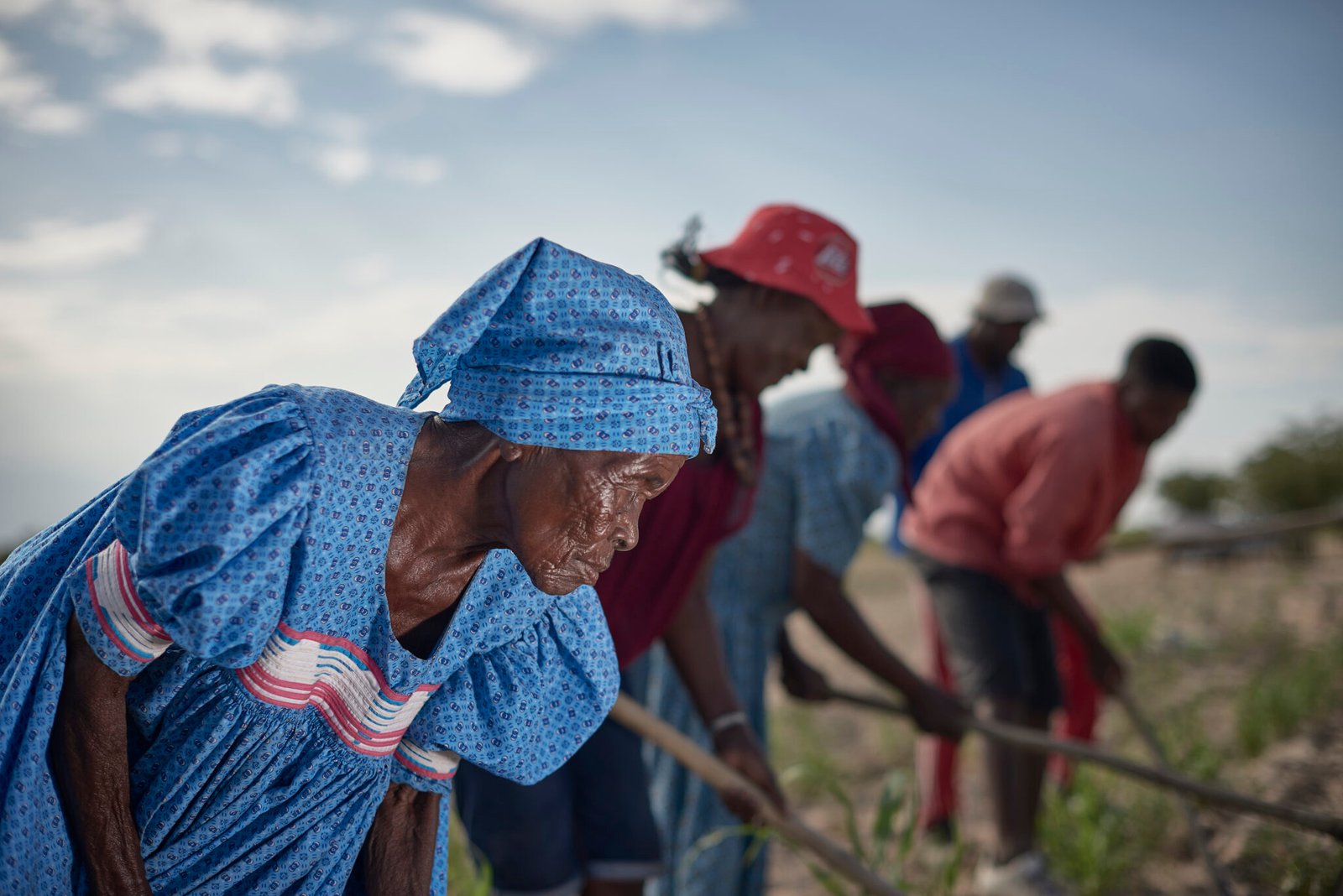
The Cuvelai and Kunene basins are among the most disaster-prone areas in Southern Africa, regularly battered by both flooding and drought. The 2008 Cuvelai floods remain a stark warning of what is at stake, having displaced 276,000 people and crippled health, transport, and food security systems across the basin. It is this vulnerability that has driven a renewed push to strengthen disaster risk management capacity on both sides of the Angola-Namibia border.
From 20th to 23rd July 2026, nearly 51 water and disaster management professionals from Namibia took part in a four-day Disaster Risk Management (DRM) Short Course, delivered virtually via Zoom. The training was organised under the “Enhanced Water Security and Community Resilience in the Adjacent Cuvelai and Kunene Transboundary River Basins” (CUVKUN) project, a USD 11.17 million initiative funded by the Global Environment Facility (GEF) and implemented by the United Nations Development Programme (UNDP) and executed by the Global Water Partnership Southern Africa (GWPSA), in collaboration with the Cuvelai Watercourse Commission (CUVECOM), the Kunene Permanent Joint Technical Committee (PJTC), and the Governments of Angola and Namibia.
The course was designed to close a critical gap: the lack of a shared understanding of disaster risk management concepts, frameworks, and practical tools among professionals working across sectors within the basin. It was delivered through a partnership between the Cuvelai Watercourse Commission (CUVECOM), WaterNet, and the Global Water Partnership (GWP) Southern Africa, with GWPSA leading on facilitation and technical content, strengthening institutional and individual capacities among Namibian stakeholders and building the resilience of communities who depend on the shared basin.
Four Days, Six Modules
The training was led by Dr Monde Patrina Mabuku of the Namibia University of Science and Technology (NUST) and Dr Maryna Storie of GWP Southern Africa, with a guest session from Mr Harsen Nyambe, Director of Sustainable Environment and Blue Economy at the African Union Commission.
Day 1 laid the foundation, introducing participants to core DRM concepts such as the disaster risk equation, hazard classification, and the six-phase disaster management cycle, alongside key governance frameworks including the Sendai Framework for Disaster Risk Reduction. Participants also worked through a live group exercise identifying hazards and vulnerabilities specific to the Cuvelai and Kunene basins.
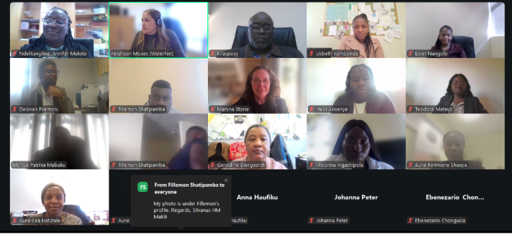
Day 1 Group Photo – CUVKUN DRM Training (20 July 2026)
Day 2 turned to preparedness and early warning systems, exploring the four pillars of the UN’s Early Warnings for All (EW4All) initiative and the difference between preparedness and anticipatory action” pre-agreed, pre-financed steps triggered by forecasts. Facilitators also introduced participants to the integration of indigenous knowledge, such as reading bird and animal behaviour, into modern early warning systems through community reporting and citizen science.
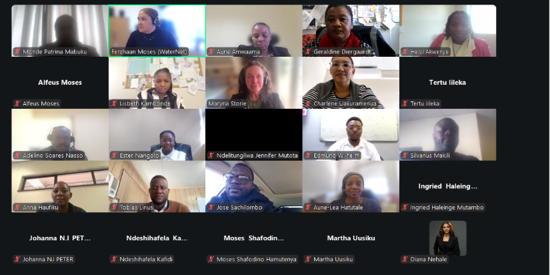
Day 2 Group Photo – CUVKUN DRM Training (21 July 2026)
Day 3 addressed disaster response and recovery, covering coordination systems such as the Incident Command System and the SADC disaster response architecture, as well as the “Build Back Better” approach to recovery,” helping communities “bounce forward” rather than simply “bounce back” after a disaster. Case studies included the Cuvelai floods, drought-driven livelihood shifts in the Kunene region, and the 2025 Etosha wildfires.
The final day, day 4, focused on technology and community engagement, featuring a live demonstration of SatGPT, an AI-powered flood-mapping tool, and the SASSCAL WeatherNet platform. Discussions covered Community-Based Disaster Risk Reduction, ethical use of AI, and practical, low-tech communication channels” from radio and WhatsApp groups to church networks and flag-based alert systems.
Day 4 Group Photo – CUVKUN DRM Training (23 July 2026)
Strong Results, Positive Feedback
The training’s impact was measurable. Post-training evaluation showed that all six modules recorded significant knowledge gains, with the largest improvements in the modules on disaster recovery, technology, and response management, precisely the areas where participants had reported the least prior knowledge. Of the participants who completed the evaluation, 67% rated the training “Excellent” and the remainder rated it “Good,” while all respondents said they were able to apply at least some of what they had learned in their work. Facilitator engagement received a perfect score.
Participant feedback captured in the post-training survey echoed this positive experience: “It was good training,” one participant wrote, while another asked, “Can we have another training on data analysis? That is one aspect I lack.” A further comment pointed to what many said they wanted next: “Site visit and observation will be an important component to the training.” Several participants also noted a preference for more in-person engagement going forward.
What’s Next
A Portuguese-language version of the course is scheduled for Angolan participants from 10th to 13th August 2026, ensuring the training reaches communities on both sides of the basin in their working language. A six-month impact evaluation is planned for January 2027 to assess how participants have applied their new skills in practice, and organisers are exploring follow-up support, including help developing fundable DRM proposals for mechanisms such as the Fund for Responding to Loss and Damage (FRLD) and the SADC Green Climate Fund.