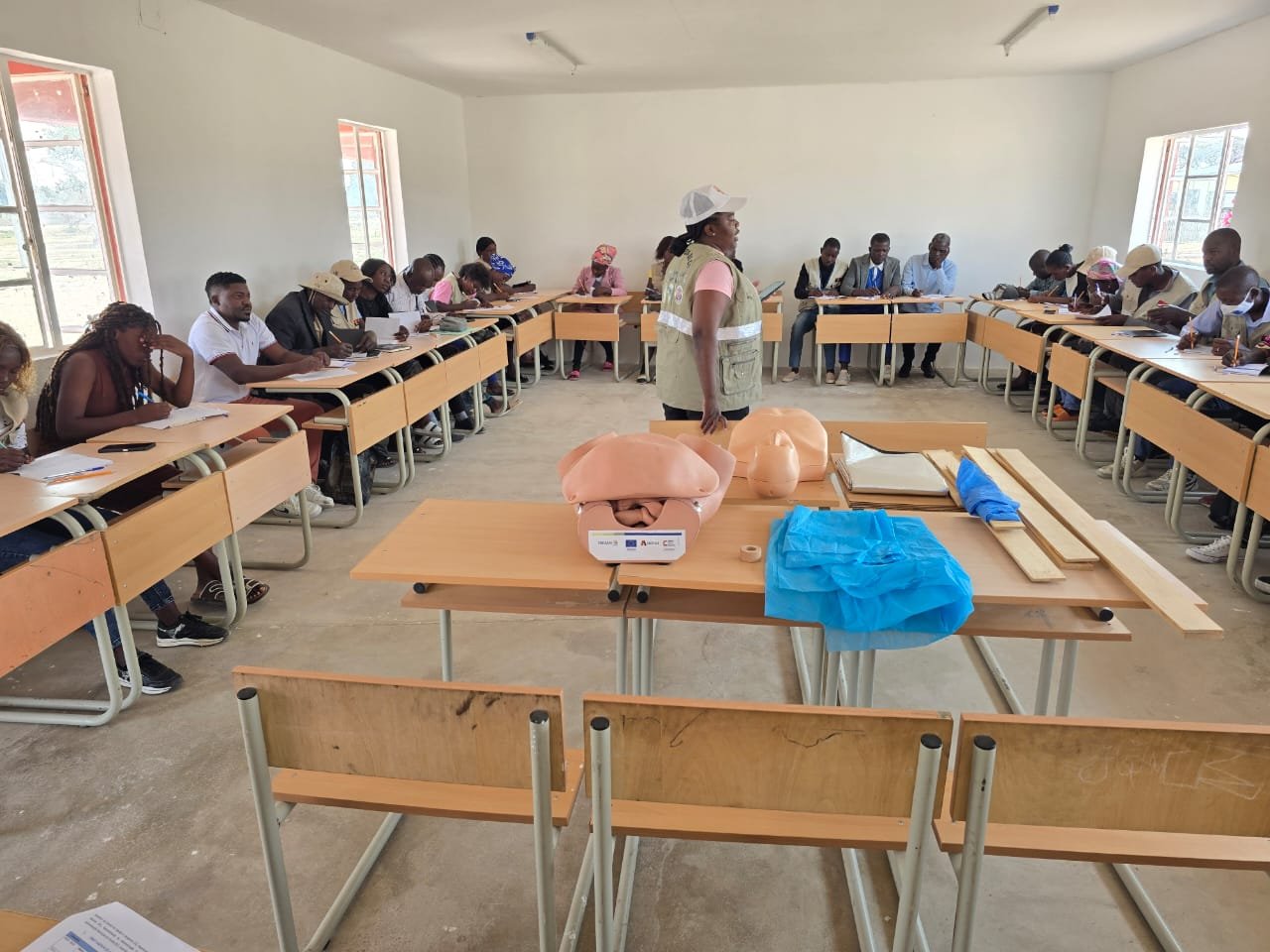
On 23 July 2026, the CUVKUN Project, in partnership with the Serviço de Protecção Civil e Bombeiros de Angola –SPCB- (Civil Protection and Firefighters Service of Angola), conducted a refresher training on first aid, early warning systems and flood response in Evale Commune, Nehone Municipality in Angola.
The training strengthened the capacities of the Disaster Risk Management Committee through practical learning and institutional collaboration.
GWPSA, through the CUVKUN Project, coordinated the activity and promoted cooperation among local authorities, technical institutions, and communities. Forty-four participants, seventeen women and twenty-seven men, attended.
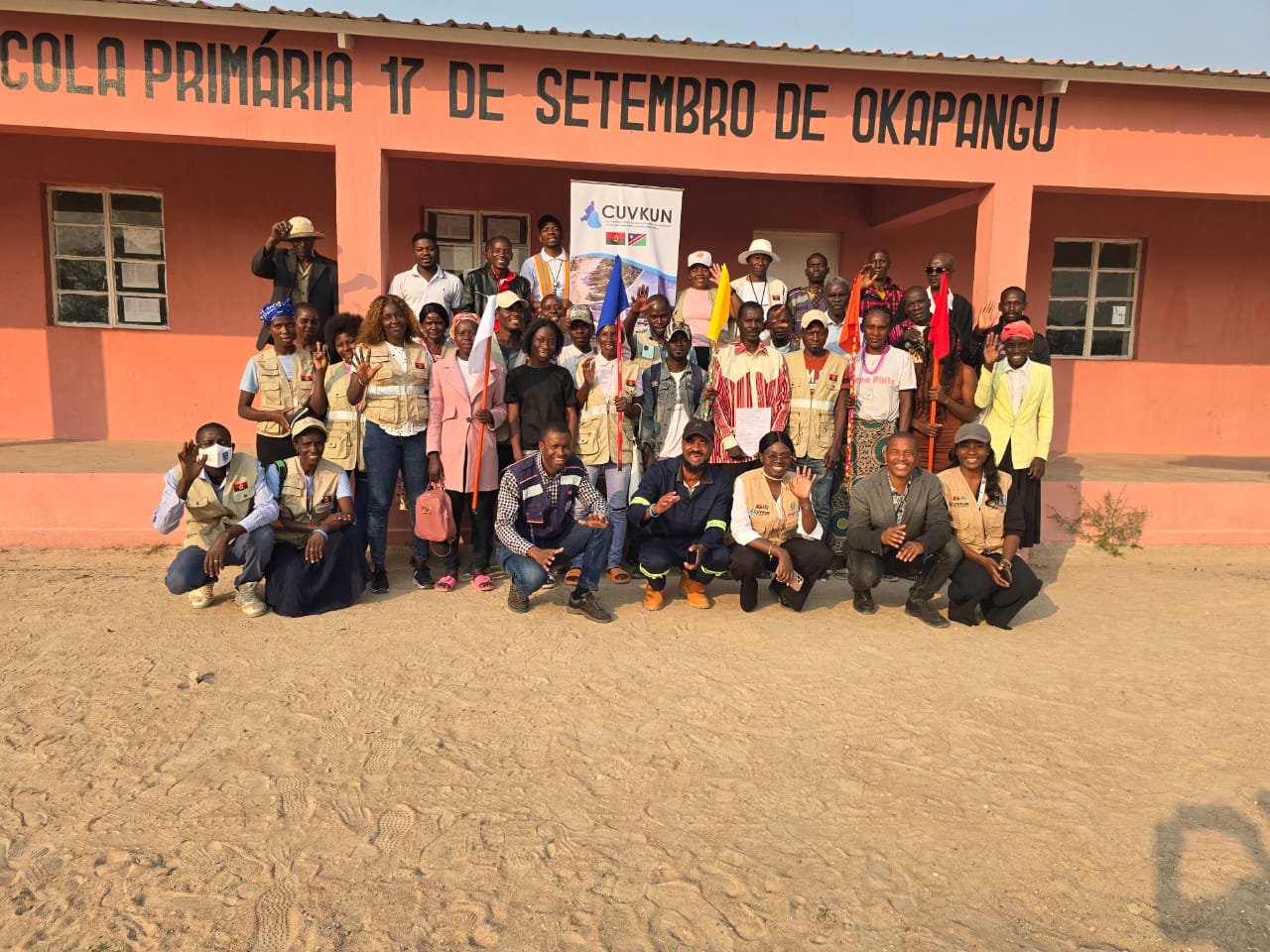
Group photo of participants and partner institutions after the training
The training was held under the CUVKUN project which is financed by the Global Environment Facility (GEF), implemented by the United Nations Development Programme (UNDP) and executed by GWPSA, in collaboration with the Cuvelai Watercourse Commission (CUVECOM), the Kunene Permanent Joint Technical Committee (PJTC), and the Governments of Angola and Namibia.
The training covered topics on search and rescue, early warning systems and flood response. Practical simulations enabled participants to apply rescue procedures, interpret warning levels and improve emergency communication. Discussions highlighted stronger coordination, clear community communication, and the need to replace damaged or lost committee identification cards. Key messages stressed that preparedness, effective communication, practical exercises and partnerships are essential for resilient communities.
“Strengthening local capacities for disaster risk management and community preparedness is essential to ensuring that our communities can respond effectively to emergency situations and flood-related risks,” Rosario Ndilipofiwe, Administrator of Evale Commune.
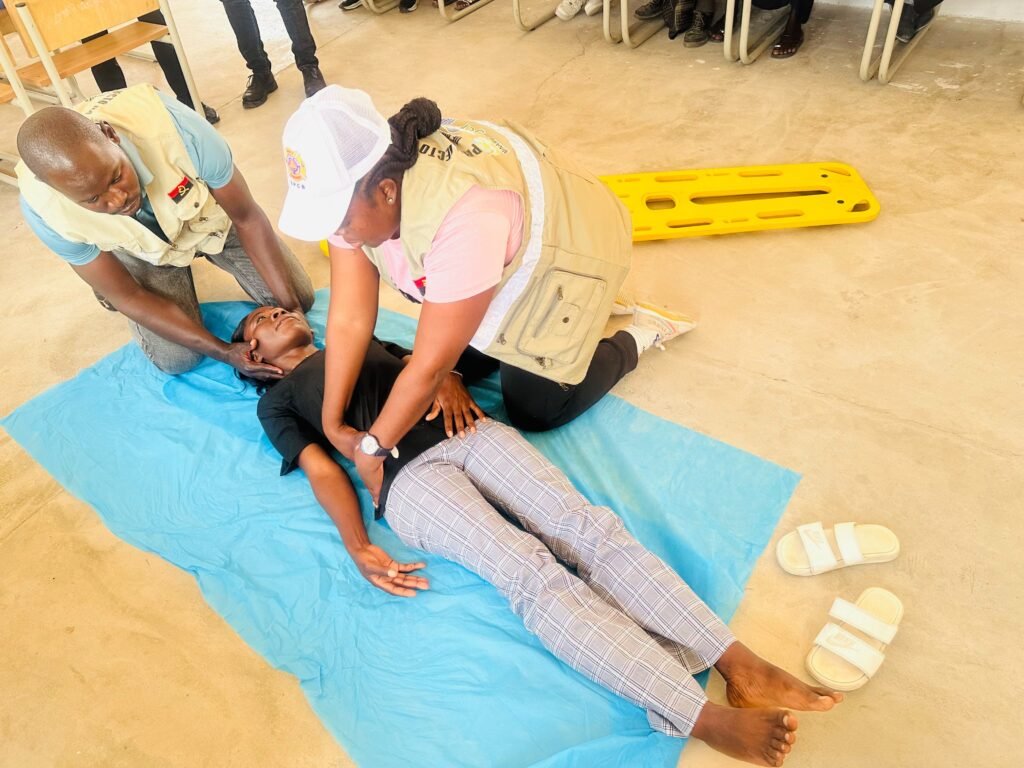
Participants undertaking flood early warning and response simulations
The activity strengthened knowledge in first aid, emergency response and early warning systems, improved understanding of flood alert levels, enhanced institutional coordination and increased preparedness for organised responses to future flood events.
Participants appreciated the training as an opportunity to refresh their knowledge, strengthen their capacities, and improve their preparedness for emergency situations.
“We appreciate this initiative, which allowed us to refresh previously acquired knowledge and strengthen our response capacities. As members of the Disaster Risk Management Committee, we are better prepared to face the challenges of disaster risk management in our community and are committed to fulfilling our role responsibly,” Domingos Bonifácio, Disaster Risk Management Committee Coordinator.
The training successfully strengthened disaster preparedness, practical response skills and institutional coordination. Through the CUVKUN Project and its partners, local capacities were reinforced, contributing to safer and more resilient communities in the Cuvelai and Kunene River Basins.